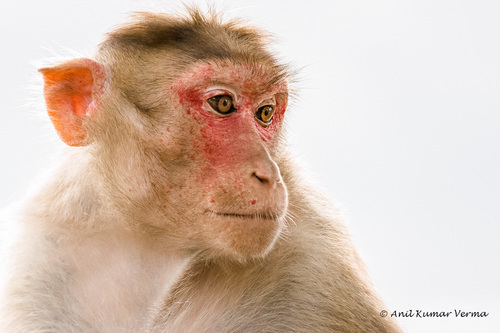
Bonnet Macaque
Macaca radiata
Meet the clever and social Bonnet Macaque, famous for the unique 'cap' of hair on its head. Native to Southern India, these adaptable primates are as comfortable in ancient temples as they are in the deep jungle.
Quick Identification
Size
Head-to-body length 35–60 cm (14–24 in); tail 48–70 cm (19–28 in); weight 3.5–9 kg (7.7–19.8 lb)
Colors
Pale grey-brown to golden-brown upperparts with whitish underparts; hairless pinkish-tan face
Key Features
- Circular whorl of hair on the crown radiating outward
- Long tail that exceeds the head-and-body length
- Large, prominent ears and a hairless pink face
- Social behavior in large, multi-male troops
When You’ll See Them
Geographic range
Where Does the Bonnet Macaque Live?
The Bonnet macaque is a native treasure of the Asian continent, found exclusively in Southern India. Its natural territory is bounded by the Indian Ocean on three sides and the Godavari and Tapti rivers to the north, creating a distinct geographic enclave where they thrive in everything from deep jungles to bustling city outskirts.
Basemap © OpenStreetMap contributors
Behavior
Unlike many other primates, Bonnet macaques have adapted remarkably well to human environments. They are frequently seen near temples, tourist sites, and urban gardens, where they have learned to exploit human-provided food sources. However, they remain primarily arboreal and are agile climbers, spending a significant portion of their day foraging in the canopy or resting in the shade during the heat of the afternoon.
EverydayEarth exclusive
Camera Tips
These monkeys are incredibly curious and intelligent, which can be a challenge for equipment safety. Ensure your camera is housed in a 'bear box' or a very secure metal security case, as they may try to poke, pull, or even chew on exposed parts of the device. Avoid using loose straps or bungee cords that they can easily grab or unhook. To draw them into the frame, you don't necessarily need bait, but placing the camera near natural food sources like wild figs or berries during the fruiting season is the most effective strategy.
Settings-wise, use a fast trigger speed (0.3 seconds or less) because macaques move quickly and unpredictably. A high-resolution video mode is preferable to photos, as it allows you to observe their fascinating social interactions, such as grooming and play. Set the camera to capture 20-30 second clips with a short recovery time to ensure you catch the entire troop as they pass by in a line.
During the monsoon season, ensure your camera has fresh desiccant packs inside the housing to prevent fogging in the humid Indian climate. While Bonnet macaques are active year-round, you'll see the most interesting social behavior during the breeding season or when infants are present in the early months of the year. Always remember to maintain a respectful distance and avoid habituating them to human food if you are checking cameras in person.
Similar Species
Species that look similar or are commonly confused with Bonnet Macaque.
Rhesus Macaque
Lacks the circular crown whorl and has a much shorter tail; range is primarily Northern India.
Lion-tailed Macaque
Much darker fur (almost black) with a prominent silver-white mane and a tufted tail.
Toque Macaque
Very similar 'cap' of hair but is endemic only to the island of Sri Lanka.
Frequently Asked Questions
Record Bonnet Macaque at your habitat
Connect a camera to start building your own species record — AI identifies every visitor automatically.