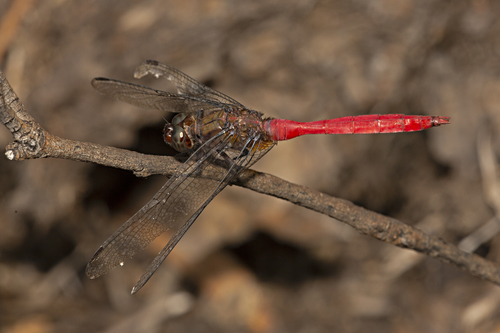
Fiery Skimmer
Orthetrum villosovittatum
A vibrant splash of scarlet in the garden, the Fiery Skimmer is one of Australia's most striking dragonflies. Known for its bold territorial displays and 'obelisk' sun-basking pose, this expert aerial hunter is a favorite for backyard wildlife enthusiasts.
Quick Identification
Size
Length 45-50 mm (1.8-2 in); wingspan 70-75 mm (2.8-3 in)
Colors
Males feature a brilliant fiery red to orange-red abdomen with a darker thorax; females and juveniles are golden-brown or ochre with dark markings
Key Features
- Vivid fiery red abdomen in mature males
- Amber-yellow tint at the base of the wings
- Strong perching behavior on low vegetation
- Noticeable dark stripes on the thorax
When You’ll See Them
Geographic range
Where Does the Fiery Skimmer Live?
Native to the Oceania and Southeast Asia regions, the Fiery Skimmer is a common sight across the northern and eastern reaches of the Australian continent. Its range extends from Victoria through New South Wales and Queensland, reaching into the Northern Territory and the islands of New Guinea and the Moluccas. This adaptable insect is equally at home in coastal wetlands as it is in well-watered suburban environments throughout the Pacific region.
Basemap © OpenStreetMap contributors
Behavior
The Fiery Skimmer is a classic 'percher' dragonfly, characterized by its habit of sitting on prominent twigs, reeds, or rocks to scan its surroundings. Males are highly territorial and will vigorously defend their chosen sun-drenched spot near water, darting out to chase away rivals or to snatch small flying insects from the air. They almost always return to the same perch, which makes them a delight for patient observers and photographers.
During the hottest parts of the day, these dragonflies exhibit a fascinating thermoregulation behavior called 'obelisking.' They tip their abdomen vertically toward the sun to reduce the surface area exposed to direct heat, preventing their bodies from overheating. While they are wary of sudden movements, they are relatively bold compared to other dragonfly species and can often be found in suburban backyards far from major water sources, as long as there is a pond or damp patch nearby.
EverydayEarth exclusive
Camera Tips
To capture the Fiery Skimmer on camera, you must take advantage of their territorial nature. Identify a 'favorite perch'—usually a sunlit stick or a tall reed overhanging a pond—where you have seen a male landing repeatedly. Secure your AI-powered camera on a tripod or mount just 12 to 24 inches from this spot. Because they are relatively small, using a macro lens or a camera with a tight focal range is essential to see the intricate details of their wing venation and large compound eyes.
Lighting is the most critical factor for showcasing their vibrant color. Position your camera so the sun is behind you or to the side; this 'front-lights' the dragonfly, making the male's red abdomen glow with incredible intensity. Early morning or late afternoon sun provides a softer, warmer light that avoids the harsh glares and deep shadows often found at midday, though the skimmers themselves are most active when it is hot.
If you don't have a natural perch in the perfect spot, you can easily create one. Drive a slender bamboo stake or a weathered branch into the ground near your garden pond. These dragonflies prefer elevated, high-visibility spots, and they will likely adopt your stake as their new hunting lookout within hours. Set your camera's trigger to its highest sensitivity and use a fast shutter speed (at least 1/1000s) if your device allows manual settings, as their take-offs and landings are lightning-fast.
Similar Species
Species that look similar or are commonly confused with Fiery Skimmer.
Frequently Asked Questions
Record Fiery Skimmer at your habitat
Connect a camera to start building your own species record — AI identifies every visitor automatically.