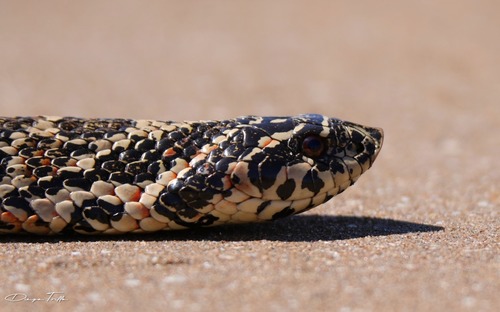
South American Hognose Snake
Xenodon dorbignyi
A master of theatrical defense and a specialist of the sandy pampas, the South American Hognose Snake uses its unique shovel-nose to navigate the grasslands of the southern cone.
Quick Identification
Size
Typically 40–60 cm (16–24 inches) in length, with a thick, stocky build.
Colors
Earthy tones of tan, light brown, or grey with a series of dark brown or black dorsal blotches; the underside is often yellowish or white with dark checkered markings.
Key Features
- Distinctive upturned, shovel-like snout
- Thick, heavy-set body shape
- Large, dark blotches along the back and sides
When You’ll See Them
Geographic range
Where Does the South American Hognose Snake Live?
This fascinating reptile is native to the southern half of South America, thriving in the temperate and subtropical regions. Its primary range encompasses the pampas of Argentina, the rolling hills of Uruguay, and the southern reaches of Brazil and Paraguay. It is a lowland specialist, favoring open landscapes where the soil is soft enough to accommodate its burrowing lifestyle.
Basemap © OpenStreetMap contributors
Behavior
The South American Hognose Snake is perhaps best known for its theatrical defensive displays. When threatened, it first attempts to intimidate predators by flattening its neck and raising the front of its body, mimicking a cobra. If this display fails to ward off a threat, the snake often resort to 'thanatosis'—rolling onto its back, opening its mouth, and playing dead. This elaborate performance is designed to discourage predators that prefer live prey.
In daily life, these snakes are docile and spend much of their time on the ground. They are skilled burrowers, using their specialized snouts to navigate through sandy soil or leaf litter. While they possess a mild venom used to subdue prey, they are not considered dangerous to humans and rarely attempt to bite defensively, preferring their famous 'bluff' tactics instead.
EverydayEarth exclusive
Camera Tips
To successfully capture the South American Hognose Snake on a backyard or trail camera, focus on 'micro-habitat' placement. These snakes are highly terrestrial and stay low to the ground, so position your camera no more than 4 to 6 inches high. An angle looking slightly downward onto a patch of sandy soil or a clear path through tall grass is ideal. Because they are not as fast as many other snakes, a standard trigger speed will work, but you should maximize the motion sensitivity to ensure the camera picks up their low-profile movement.
Focus your efforts on areas that attract their primary food source: toads. A camera placed near a ground-level water feature, a damp garden corner, or a pile of flat rocks will have a much higher success rate. While you cannot 'bait' a hognose snake with food in the traditional sense, maintaining a garden that supports a healthy amphibian population is the best way to ensure they visit your lens's field of view.
Since this species is strictly diurnal, you can save battery life by setting your camera to only record during daylight hours. They are most active during the warmer months of the Southern Hemisphere (October through March). In your camera settings, opt for short video clips (10-15 seconds) rather than still photos; the snake’s distinctive 'sidewinding' or burrowing movements and potential defensive displays are much more interesting to witness in motion.
Similar Species
Species that look similar or are commonly confused with South American Hognose Snake.
Frequently Asked Questions
Record South American Hognose Snake at your habitat
Connect a camera to start building your own species record — AI identifies every visitor automatically.