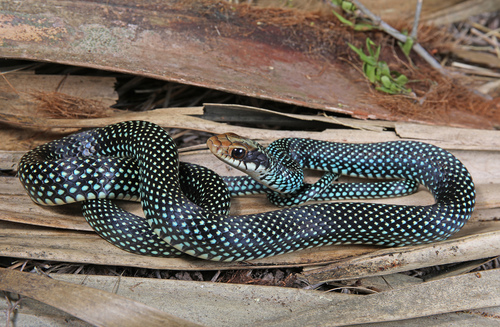
Speckled Racer
Drymobius margaritiferus
With a shimmering 'pearl' on every scale and lightning-fast reflexes, the Speckled Racer is a master of the tropical undergrowth. This nonvenomous beauty is a favorite among backyard observers for its vibrant patterns and active hunting style.
Quick Identification
Size
75-100 cm (30-40 inches) in length, occasionally reaching up to 127 cm (50 inches)
Colors
Deep green to black dorsal scales, each marked with a single yellow or pale green spot; belly is cream or light yellow.
Key Features
- Distinct yellow or greenish spot on every dorsal scale
- Large eyes with round pupils and keen vision
- Slender, streamlined body built for high-speed travel
When You’ll See Them
Geographic range
Where Does the Speckled Racer Live?
The Speckled Racer is native to the Americas, with its northernmost reach extending into the Rio Grande Valley of southern Texas in the United States. From there, its core range runs south through the coastal lowlands and tropical regions of Mexico and across the entirety of Central America. The species finally reaches its southern limit in northern South America, where it is frequently found in the humid habitats of Colombia.
Basemap © OpenStreetMap contributors
Behavior
While nonvenomous and harmless to humans, their flighty nature and speed make them a challenge to observe closely. They are primarily terrestrial but are excellent climbers and capable swimmers, often found hunting near the water's edge where their favorite prey is most abundant. In backyard settings, they are beneficial neighbors that help maintain a balanced ecosystem by controlling amphibian and small pest populations.
EverydayEarth exclusive
Camera Tips
Since these are active hunters rather than sit-and-wait predators, your camera's trigger speed is the most important factor. Set your AI-powered camera to its highest sensitivity and use a fast shutter speed or high-frame-rate video setting to prevent capturing a 'ghost' or just a blurry tail. Speckled Racers are highly visual and are attracted to movement; maintaining a healthy backyard habitat for amphibians is the best natural lure you can provide.
Optimal lighting is key for bringing out the 'pearls' on their scales. Position your camera so it faces away from the sun to avoid lens flare during the bright mid-day hours when these snakes are most active. In the hotter summer months, they are most likely to be caught on camera during the cooler morning hours (8 AM to 11 AM). Using a camera with a high-quality glass lens will help resolve the intricate yellow spots that distinguish them from other dark-colored racers.
Similar Species
Species that look similar or are commonly confused with Speckled Racer.
Frequently Asked Questions
Record Speckled Racer at your habitat
Connect a camera to start building your own species record — AI identifies every visitor automatically.