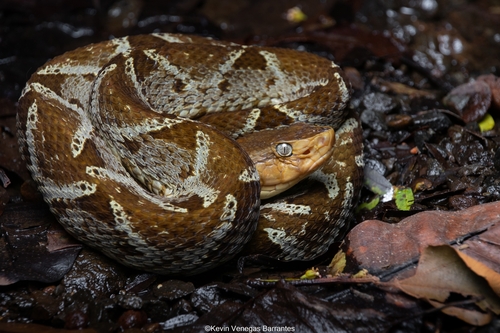
Terciopelo
Bothrops asper
The Terciopelo is the ultimate pit viper of the Americas, known for its incredible camouflage and vital role in tropical ecosystems. Discover how to safely observe this powerful predator using remote camera technology.
Quick Identification
Size
Typically 1.2 to 2 metres (4 to 6.5 feet) in length, with exceptional females reaching 2.5 metres (8.2 feet); can weigh up to 6 kilograms (13 pounds).
Colors
Olive, gray, or brown ground color with pale-bordered dark triangles or 'X' markings along the flanks; underside is usually creamy yellow with dark mottling.
Key Features
- Broad, spade-shaped head clearly distinct from the neck
- Intricate 'X' or 'V' shaped patterns along the body
- Deep heat-sensing pits between the eyes and nostrils
- Vertical, elliptical pupils and a pale yellow belly
When You’ll See Them
Geographic range
Where Does the Terciopelo Live?
Native to the Neotropical realm, the Terciopelo occupies a vast range starting from the coastal lowlands of northeastern Mexico and moving south through the entirety of Central America. Its core territory encompasses the lush environments of Costa Rica and Panama, extending deep into northern South America through Colombia, Ecuador, and parts of Venezuela. These snakes are primarily lowland specialists, rarely venturing into high-altitude mountain ranges, but they thrive in the humid transition zones where forest meets field.
Basemap © OpenStreetMap contributors
Behavior
The Terciopelo is a master of the ambush, spending its daylight hours coiled and perfectly camouflaged among fallen leaves or the buttress roots of large trees. While it has a reputation for being 'aggressive,' it is more accurately described as highly defensive; unlike many snakes that flee when approached, the Terciopelo often stands its ground and will strike if it feels its personal space has been breached. It is a solitary creature, primarily nocturnal, and possesses one of the highest reproductive rates among vipers, with females capable of birthing up to 100 live young in a single season.
In areas where human activity overlaps with its habitat, the Terciopelo is frequently found near agricultural sites like coffee or banana plantations. This proximity is driven by the abundance of rodents that thrive in disturbed environments. While it generally avoids humans, its reliance on camouflage means that most bites occur when a person accidentally steps on or near the snake. Despite its fearsome reputation, it is a vital component of the ecosystem, acting as a natural pest control agent by keeping small mammal populations in check.
EverydayEarth exclusive
Camera Tips
To capture high-quality footage of a Terciopelo, camera placement is everything. These snakes are ground-dwellers that rely on camouflage, so mount your AI-powered camera very low to the ground—no more than 6 to 12 inches high. Aim the lens toward natural 'corridors' like the base of large tropical trees with buttress roots, or alongside fallen logs, which the snakes use as cover and hunting blinds. If you are monitoring a backyard or farm edge, placing the camera near woodpiles or thick vegetation where rodents congregate will significantly increase your chances of a sighting.
Because the Terciopelo is primarily nocturnal, ensure your camera has high-quality infrared (IR) capabilities. 'No-glow' or 'black' IR LEDs are preferable, as they won't startle the snake or its prey, allowing you to observe natural hunting behaviors. Set your camera to take short video clips (15-30 seconds) rather than just photos; the subtle movements of the snake’s tongue and its slow, methodical crawling are much easier for AI models to identify in video format against a cluttered, high-contrast forest floor.
Safety should be your absolute priority when checking cameras in Terciopelo territory. Always use a long stick to clear the area around the camera before approaching, and wear snake-proof gaiters or tall rubber boots. Never reach into thick brush or under the camera housing with your bare hands. Since these snakes are most active during the rainy season, ensure your camera housing is well-sealed against humidity and check the lens for fogging or debris regularly to maintain crystal-clear captures.
Frequently Asked Questions
Record Terciopelo at your habitat
Connect a camera to start building your own species record — AI identifies every visitor automatically.