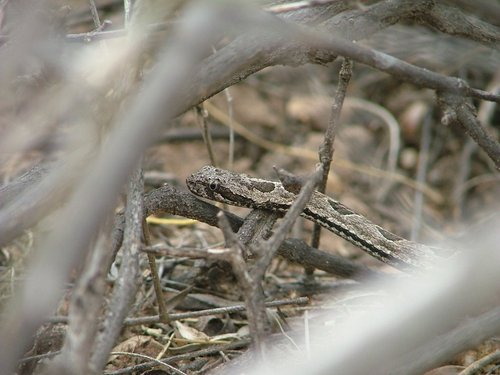
False Tomodon Snake
Tachymenis trigonatus
An endemic treasure of Argentina, the False Tomodon Snake is a master of disguise in the arid scrublands. This rear-fanged beauty is a fascinating subject for patient wildlife observers and backyard researchers alike.
Quick Identification
Size
40 to 60 cm (16 to 24 inches) in length; relatively slender build
Colors
Tan, grey, or light brown base with a series of darker brown or blackish dorsal blotches often forming a zig-zag or wavy pattern
Key Features
- Distinctly triangular-shaped head
- Slender body with a long, tapering tail
- Rear-fanged (opisthoglyphous) dentition
- Large eyes with round pupils and a dark post-ocular stripe
When You’ll See Them
Geographic range
Where Does the False Tomodon Snake Live?
The False Tomodon Snake is a South American specialist, found exclusively within the borders of Argentina. This endemic species occupies a significant stretch of the country, ranging from the central provinces down into the northern reaches of Patagonia. It is most frequently encountered in the Monte desert and the rugged, semi-arid landscapes of the Andean foothills, where the rocky terrain provides ample hiding spots.
Basemap © OpenStreetMap contributors
Behavior
The False Tomodon Snake is a secretive and primarily terrestrial reptile. It is a rear-fanged (opisthoglyphous) species, meaning it possesses venom intended for subduing its small prey rather than for defense against large animals. While they are venomous, they are generally shy and will choose flight over fight when encountering humans, making them harmless if left alone in their natural environment.
These snakes are mostly active during the day (diurnal), particularly in the morning hours when they emerge to bask and regulate their body temperature. They are solitary hunters, moving slowly through leaf litter or rocky crevices to surprise their prey. During the colder winter months in Argentina, they undergo a period of brumation, retreating deep into rock piles or underground burrows to survive the frost.
EverydayEarth exclusive
Camera Tips
To successfully capture a False Tomodon Snake on an AI-powered camera, you must focus on 'micro-habitats.' These snakes are ground-dwellers that rely heavily on camouflage. Position your camera very low—ideally 5 to 10 centimeters (2-4 inches) off the ground—using a stake or a flat rock. Angle the lens slightly downward to ensure you aren't missing the slender profile of a snake moving directly underneath the sensor's field of view.
The best locations for placement are near 'basking highways.' Look for flat, sun-exposed rocks that are adjacent to dense thorny scrub or crevices. These snakes will often move from the safety of the brush onto the rock to warm up in the morning sun. If you have a backyard with rock walls or piles of flat stones in an arid region, these are perfect natural funnels for snake movement.
Because snakes are ectothermic and don't give off much heat, traditional PIR (Passive Infrared) sensors can sometimes struggle to trigger. Set your camera to 'Time Lapse' mode with a short interval (e.g., every 30 seconds) during the peak morning hours, or use a camera with high-sensitivity motion detection. High-definition video is significantly better than still photos for this species, as their movement is the easiest way to distinguish them from the surrounding dirt and dried leaves.
Avoid using food baits, as these snakes hunt live, moving prey like lizards. Instead, focus on water sources if you are in a particularly dry area. A shallow ground-level birdbath or a simple saucer of water placed near a rock pile can be a magnet for both the False Tomodon Snake and its primary food source, lizards, creating a high-traffic area for your camera to monitor.
Similar Species
Species that look similar or are commonly confused with False Tomodon Snake.
Frequently Asked Questions
Record False Tomodon Snake at your habitat
Connect a camera to start building your own species record — AI identifies every visitor automatically.